
Seguimiento por Píxeles y CIPA: el Acuerdo de $5M de European Wax Center Muestra Por Qué Su CMP Debe Bloquear las Etiquetas Antes del Consentimiento
8 min read



Índice de contenidos
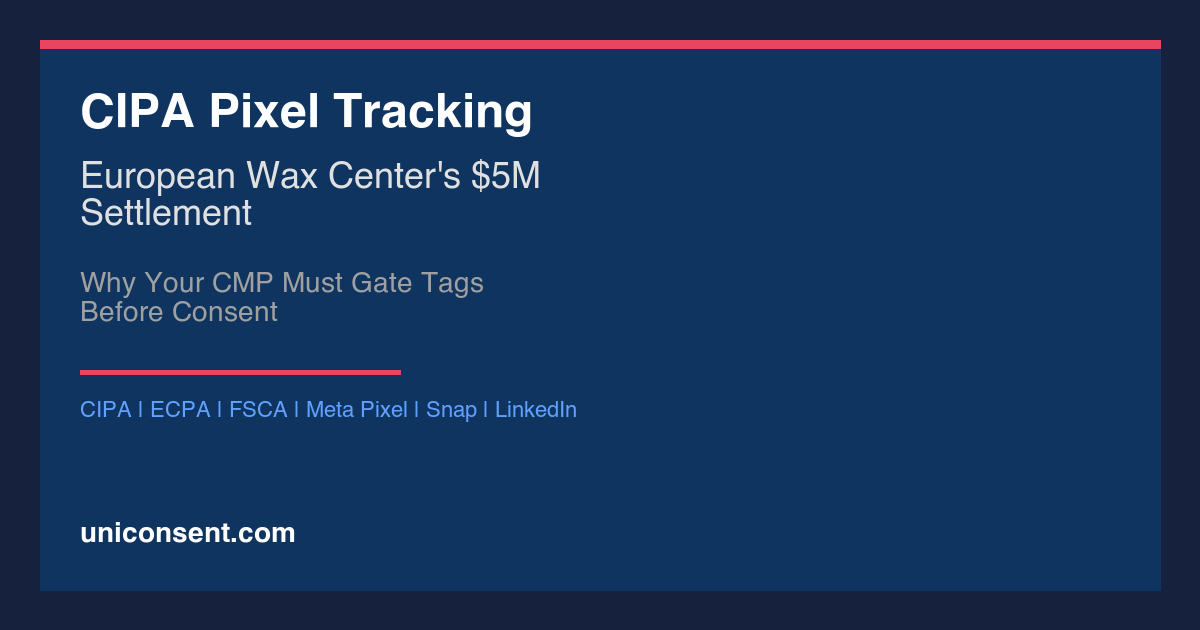
El 2 de abril de 2026, European Wax Center acordó pagar $5 millones para resolver una demanda colectiva que alegaba que su sitio web desplegaba píxeles de seguimiento sin el consentimiento del visitante. El caso, Cumor v. European Wax Center, Inc., se presentó ante el 13.º Circuito Judicial del Condado de Hillsborough, Florida. El acuerdo cubre a los visitantes de waxcenter.com desde el 30 de junio de 2023 hasta la fecha de la aprobación preliminar.
El sitio web de European Wax Center ejecutaba las etiquetas de seguimiento de Meta Pixel, Attentive Mobile, LinkedIn y Snap — la misma pila que utilizan miles de negocios de comercio electrónico y servicios. Los píxeles capturaban información del visitante, incluidos datos relacionados con reservas. Ninguno de estos píxeles esperaba el consentimiento antes de activarse.
 Seguimiento por Píxeles y CIPA: el Acuerdo de $5M de European Wax Center
La Teoría Legal
La demanda invocó tres leyes, todas originalmente redactadas para las escuchas telefónicas: la Ley de Invasión de la Privacidad de California (CIPA), la Ley Federal de Privacidad de las Comunicaciones Electrónicas (ECPA) y la Ley de Seguridad de las Comunicaciones de Florida (FSCA). El argumento central era que el seguimiento mediante JavaScript de terceros en el sitio web constituía la interceptación de las comunicaciones de un visitante con el sitio sin su consentimiento.
La Sección 631 de CIPA prohíbe la interceptación no autorizada de comunicaciones electrónicas, y los tribunales han estado ampliando esa prohibición a los píxeles de seguimiento con una frecuencia cada vez mayor a lo largo de 2025 y 2026. European Wax Center destaca por el tamaño del acuerdo y por lo ordinario de la configuración de seguimiento que lo desencadenó. Este no fue un caso sobre herramientas de repetición de sesión ni registradores de pulsaciones de teclas. Píxeles de marketing estándar, haciendo exactamente lo que están diseñados para hacer, en la línea de tiempo predeterminada que utilizan la mayoría de los gestores de etiquetas.
$5,000 Por Infracción, Por Cada Visitante
CIPA establece daños estatutarios de hasta $5,000 por infracción. Cuando la clase incluye a todos los visitantes de un sitio web comercial durante un período de varios años, la exposición agregada crece rápidamente. European Wax Center optó por llegar a un acuerdo de $5 millones en lugar de litigar un caso en el que las cuestiones fácticas —si los píxeles se activaron, si se activaron antes del consentimiento, qué datos capturaron— son en gran medida respondibles mediante análisis forense técnico.
Los reclamantes válidos reciben $10 cada uno, sujeto a un ajuste proporcional. Existe un requisito de elegibilidad inusual: los reclamantes deben declarar que no estaban utilizando bloqueadores de análisis, configuraciones del navegador que bloquean cookies, extensiones de prevención de seguimiento ni el modo de navegación privada cuando visitaron el sitio. La clase se limita a los visitantes cuyos datos fueron realmente capturados. Los visitantes que bloquearon los píxeles no tienen ninguna reclamación porque no se produjo ninguna interceptación.
Ese filtro de elegibilidad refuerza la base fáctica de estos casos. La infracción depende de si los datos fueron realmente transmitidos desde el navegador del visitante a un servidor de terceros sin consentimiento. Si el píxel se activó y transmitió datos, se produjo la interceptación. Si el visitante lo bloqueó, no ocurrió.
Mismo Patrón, Misma Exposición
European Wax Center encaja en la teoría dominante de los demandantes en los litigios de CIPA de 2026: la activación de píxeles antes del consentimiento. Un visitante llega a la página. Antes de que aparezca cualquier interfaz de consentimiento o de que el visitante realice cualquier acción, las etiquetas de terceros se ejecutan y envían datos a servidores externos. Una interceptación que ocurre antes del consentimiento no puede ser autorizada retroactivamente por un consentimiento otorgado después.
La acumulación de reclamaciones entre CIPA, ECPA y FSCA es una práctica habitual ahora. Los demandantes presentan bajo múltiples leyes de escuchas telefónicas porque los mismos hechos sustentan todas ellas, y un demandado que refuta una teoría aún enfrenta las demás. La acumulación entre jurisdicciones amplía la clase potencial más allá de los residentes de California, ya que ECPA es federal y FSCA cubre a los visitantes de Florida.
Este caso también sigue la tendencia más amplia observada en Allison v. PHH Mortgage, donde el derecho de acción privado de la CCPA se extendió para cubrir las divulgaciones basadas en píxeles. Las empresas que ejecutan píxeles sin gestionar ahora enfrentan exposición tanto bajo leyes de escuchas telefónicas como bajo leyes de privacidad de datos simultáneamente.
Una Pila de Marketing Estándar, Configurada de la Forma Predeterminada
La vulnerabilidad no era exótica. Las etiquetas de Meta Pixel, Attentive, LinkedIn y Snap estaban incrustadas en el sitio. Se activaban al cargar la página. No había ninguna barrera de consentimiento que impidiera la ejecución antes de que el visitante tomara una decisión.
Este es el comportamiento predeterminado en la mayoría de las configuraciones de gestión de etiquetas. Google Tag Manager activará las etiquetas en el disparador "Todas las páginas" a menos que las etiquetas estén explícitamente condicionadas a una señal de consentimiento. La mayoría de los equipos de marketing añaden píxeles con el objetivo de capturar la mayor cantidad de datos posible, y la configuración predeterminada logra eso activándose inmediatamente. "Inmediatamente" significa "antes del consentimiento", y "antes del consentimiento" ahora significa responsabilidad potencial bajo CIPA.
Los datos relacionados con reservas que capturaron los píxeles añaden otra dimensión. Cuando un visitante navega por páginas de programación de citas, las URL y el contenido de la página pueden revelar información sobre los servicios que está considerando. Esos datos, transmitidos a Meta o Snap sin consentimiento, se convierten en la base fáctica de una reclamación de interceptación.
Bloquee Sus Píxeles Hasta Obtener el Consentimiento
Todo el caso de European Wax Center giró en torno al momento en que ocurrieron los hechos. Los píxeles se activaron antes del consentimiento. Una plataforma de gestión de consentimiento que bloquea la ejecución de etiquetas según las señales de consentimiento habría evitado que los píxeles se activaran hasta que el visitante hubiera tomado una decisión.
En la práctica, esto significa que el CMP se carga antes que cualquier etiqueta de terceros. Presenta la interfaz de consentimiento. Si el visitante acepta, el CMP libera las etiquetas y estas se activan con normalidad. Si el visitante rechaza o no realiza ninguna acción, las etiquetas permanecen suprimidas. La decisión de consentimiento ocurre en la primera interacción, y las etiquetas de marketing se activan una fracción de segundo después para los visitantes que consienten, en lugar de una fracción de segundo antes de una interfaz de consentimiento que quizás nunca aparezca.
El sistema de bloqueo de etiquetas de UniConsent gestiona esta secuencia automáticamente. Ningún píxel de terceros se activa hasta que se resuelve el estado de consentimiento del usuario. Para los visitantes que consienten, el retraso es imperceptible. Para los visitantes que rechazan, los píxeles nunca se activan. La cuestión del momento que impulsó todo este acuerdo queda respondida de manera definitiva por el orden de ejecución del CMP.
Un CMP también proporciona la infraestructura probatoria que importa cuando se presenta una reclamación. UniConsent mantiene registros de consentimiento con marca de tiempo que documentan lo que se mostró a cada visitante, qué decisión tomó y qué comportamiento de etiquetas resultó. Si un demandante alega que sus datos fueron interceptados sin consentimiento, el registro de consentimiento confirma o refuta esa afirmación con precisión.
El escáner de cookies de UniConsent aborda la brecha de visibilidad que permitió que la exposición de European Wax Center se acumulara sin ser detectada. El escáner identifica cada rastreador activo en el sitio, mapea los flujos de datos hacia terceros y señala las etiquetas que no están bloqueadas por el consentimiento. Ejecutar este escaneo periódicamente detecta nuevos píxeles que los equipos de marketing añaden, antes de que esos píxeles se conviertan en la base de una demanda colectiva.
Una Tendencia en Aceleración
El acuerdo de European Wax Center no es un caso aislado. Los daños estatutarios de CIPA, la simplicidad fáctica de la activación de píxeles antes del consentimiento y el uso generalizado del seguimiento no consentido en sitios web comerciales crean un entorno propicio para los abogados demandantes.
Bloquee sus píxeles hasta obtener el consentimiento. Use una plataforma de gestión de consentimiento que controle el orden de activación de etiquetas. Ejecute un escáner de cookies para saber qué hay realmente en su sitio. Mantenga registros de consentimiento que puedan demostrar el cumplimiento a nivel de cada momento. El costo de hacer esto es una fracción de lo que European Wax Center acaba de pagar — y un acuerdo solo resuelve el pasado, no el futuro.
Acerca de UniConsent
UniConsent forma parte de la Plataforma de Experiencia de Usuario centrada en la privacidad de Transfon, que sirve a decenas de millones de usuarios al día para proporcionar una experiencia de privacidad fluida tanto para usuarios como para editores en la era posterior al GDPR. Contáctenos para saber más: hello@uniconsent.com
Leading Consent Management Platform
Compliant with GDPR, CCPA, COPPA, LGPD, PECR, PDPA, PIPEDA, and more.
Activate Google Consent Mode UniConsent to enhance the accuracy of your Google Analytics and Google Ads conversion data.
Set up Google Consent Mode →Comienza a hacer que tu sitio web y tu aplicación cumplan con el RGPD de la UE, la CPRA de EE. UU., la PIPEDA de Canadá, etc.
RegístrateRecursos de la plataforma de gestión de consentimiento
Plazo de IAB TCF 2.4 y cómo revisar tus proveedores
Demanda CIPA contra NFL.com: cuando el opt-out no detiene el rastreo — cómo hacer que el opt-out realmente funcione
Dominio CMP de Primera Parte: Sirva Su Banner de Consentimiento Desde Su Propio Dominio
UniConsent Es una CMP Certificada de Microsoft UET y Microsoft Clarity
Derecho de Reclamación del RGPD del Reino Unido: Cambios el 19 de Junio de 2026 y Qué Deben Hacer las Organizaciones
Microsoft Advertising Añade a Vietnam como Mercado con Consentimiento Obligatorio: Lo Que los Anunciantes Deben Hacer Antes del 30 de Junio de 2026
Comienza a hacer que tu sitio web y tu aplicación cumplan con el RGPD de la UE, la CPRA de EE. UU., la PIPEDA de Canadá, etc.
Regístrate