
Banner de Consentimiento de Cookies para Tealium
Integra UniConsent con Tealium para simplificar el cumplimiento normativo y mejorar la privacidad de los datos. Asegura sin esfuerzo que tus servicios basados en Tealium cumplan con los requisitos del RGPD, la CCPA, la LGPD y la Ley de Cookies de la UE.


Cómo configurarlo
1. Obtén el código de instalación de la CMP de UniConsent
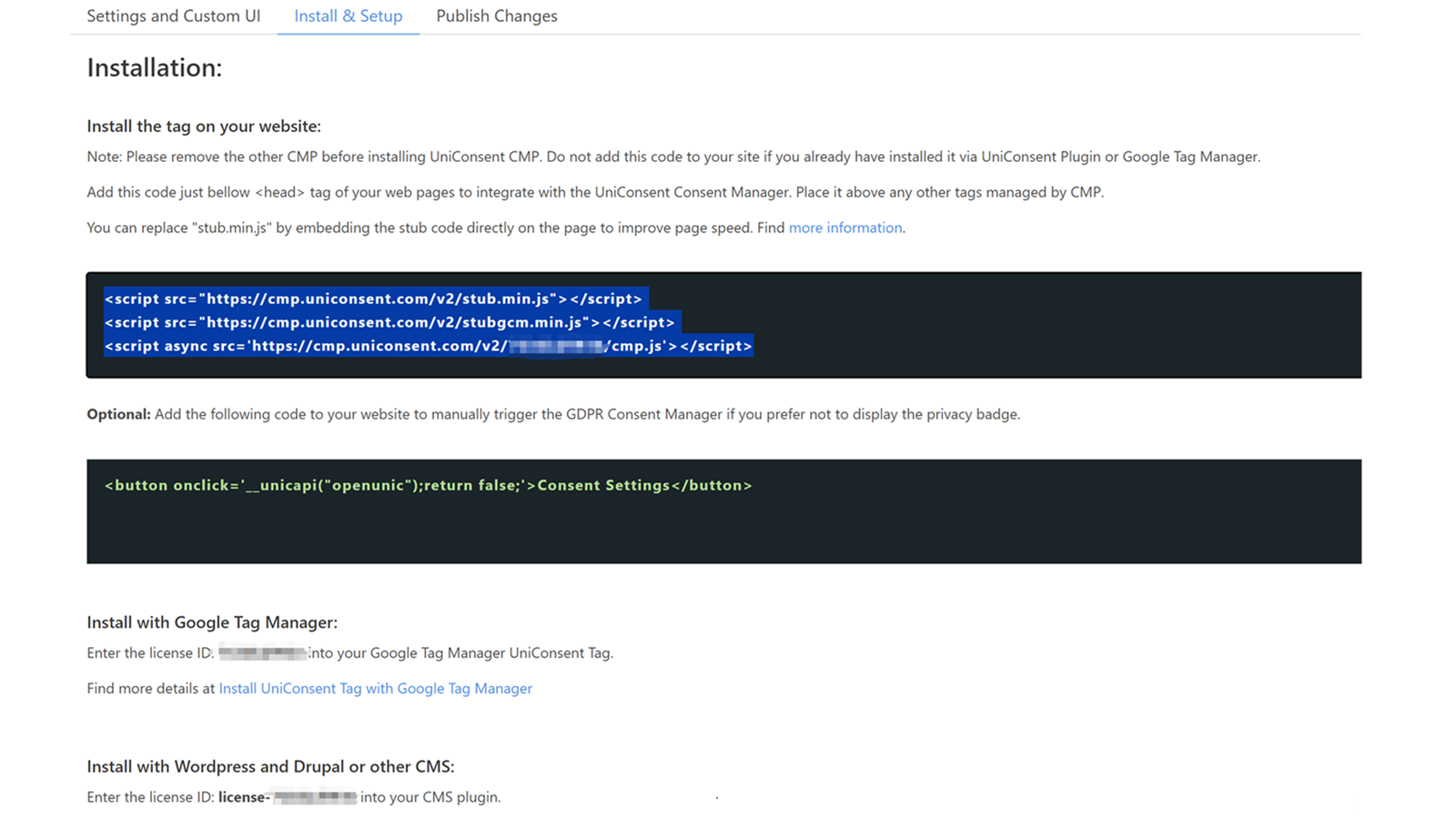
First, log in to your UniConsent account, go to Consent Manager > My Websites, and click Manage.
Second, click Install & Setup and copy the CMP code in the black area.
2. Habilita el plugin de CMP en Tealium
First, make sure the UniConsent CMP is fully operational on your site.
Second, log in to Tealium iQ and add a generic JavaScript Code Extension to handle the integration.
Create a mapping between UniConsent CMP services and the tags in Tealium using the import tool or manually map each data processing service to its corresponding tags.
3. Integración con la capa de datos
Add consent status variables from UniConsent to the Tealium data layer:
uniconsent_services_with_consent: An array of consented services.uniconsent_consent_type: The type of consent obtained (explicit or implicit).
4. Mapeo de servicios en Tealium
Set up firing conditions for each managed tag to only fire if the corresponding service name is present in uniconsent_services_with_consent.
5. Distribución de datos de consentimiento del lado del servidor (opcional)
Configure UniConsent to send webhook callbacks whenever consent status changes, and set up Tealium AudienceStream or EventStream to process these callbacks server-side.
6. Pruebas y depuración
Use Tealium's preview mode to test tag firing based on consent status and verify the data layer values.